How to Build a Simple Household Budget and Bills Tracker (UK)
A household budget doesn't have to mean spreadsheets, complicated apps or cutting out everything you enjoy. At its simplest, it means knowing what bills are coming out, when, and roughly how much is left for everything else.
This guide walks UK households through building a simple budget and bills tracker in seven steps. It takes an hour or two to set up and about twenty minutes a month to keep going.
This article gives general information only. It isn't financial advice, and your own circumstances will differ.
Step 1: List every regular bill
Start by writing down everything that comes out of your account on a regular basis. Check the last two or three months of bank statements, as it's easy to forget things. A typical UK household might include:
- Rent or mortgage
- Council tax
- Gas and electricity
- Water and sewerage
- Broadband and phone or mobile contracts
- TV licence and TV or streaming services
- Home, contents, car and life insurance
- Childcare, school costs and clubs
- Loan, credit card and other repayments
- Gym memberships and other subscriptions
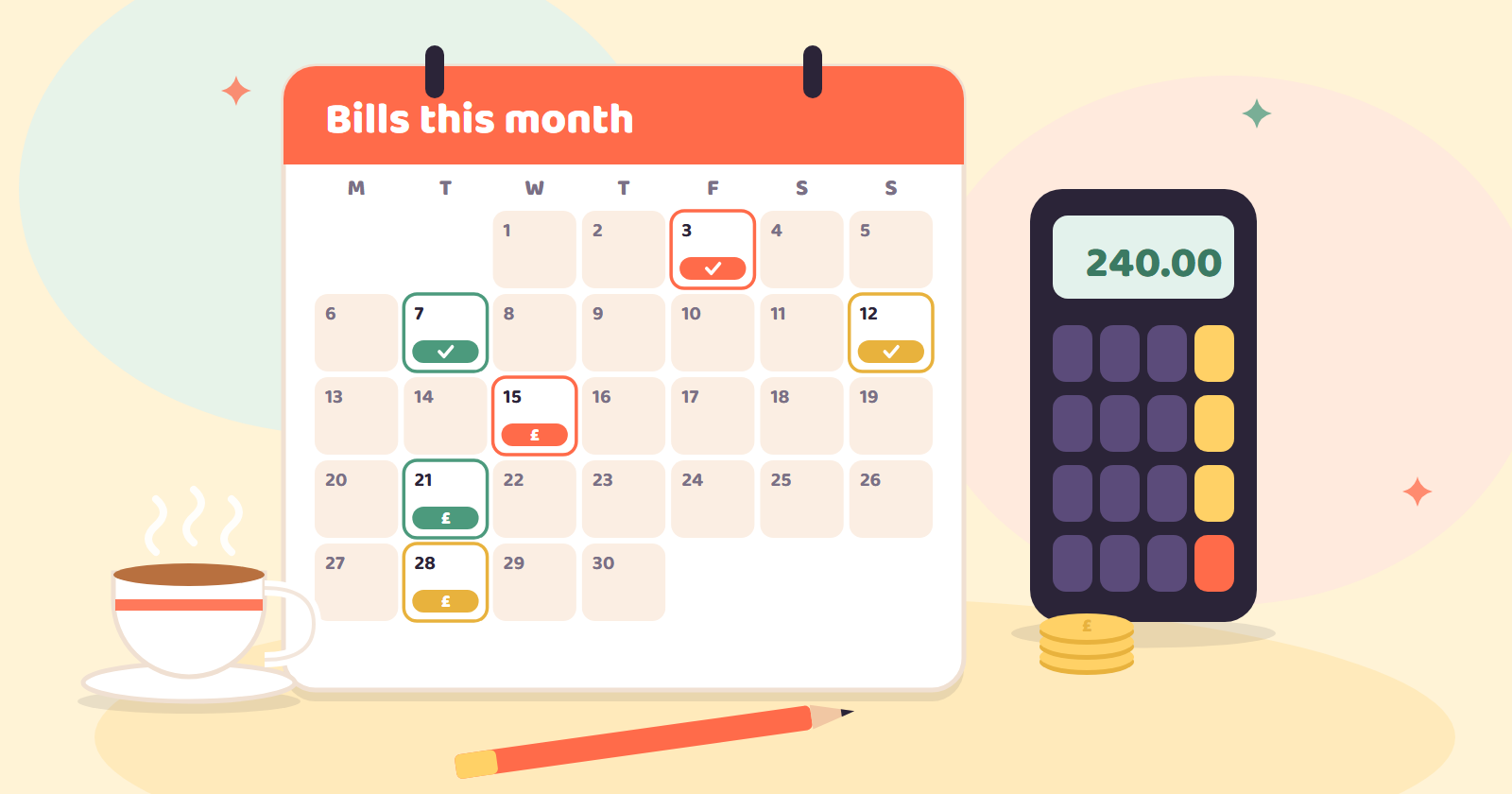
For each one, note what it costs, how often you pay it, and which day of the month it leaves your account. That last detail matters, because it shows when your money is under pressure.
Step 2: Add the variable costs
Some spending changes from month to month. Groceries, fuel, public transport, eating out, clothes, pet costs and children's activities are the usual ones. You don't need to be exact. Look at a few months of past spending and use an average to start with.
Step 3: Watch out for the annual bills
Annual and irregular bills catch a lot of households out because they don't appear every month. Think of:
- Car insurance and road tax
- MOT and car servicing
- Breakdown cover
- Home insurance renewals
- TV licence, if paid annually
- Birthdays, Christmas and holidays
- Boiler service and other home maintenance
- Vet bills and pet insurance
Write each of these down with the month it is due. Looking at the whole year in one list is often an eye-opener.
Step 4: Spread the annual costs across the year
The most useful trick in household budgeting is to divide each annual cost by twelve and set that amount aside every month. Some people call this a "sinking fund."
For example, a £360 annual insurance bill means putting aside £30 a month. When the bill arrives, the money is already there instead of arriving as a shock. Do the same for Christmas, holidays and car costs, and the year stops being full of unpleasant surprises.
A separate savings pot or account for these makes it easy to see what is set aside.
Step 5: Do a subscription check
Subscriptions are easy to sign up for and easy to forget. Go through your list and ask about each one:
- Are we still using it?
- Is there a cheaper plan, or an annual price that works out lower?
- Is someone else in the household paying for the same thing?
Cancel anything you have stopped using, and put a reminder in the diary for any free trial that will start charging you.
Step 6: Work out what is left
Add up all your regular bills, variable costs and monthly set-asides, and compare the total with your household's monthly income. What is left is your flexible money, for treats, savings and the unexpected.
If the numbers don't add up, that is useful to know. You can then look for where to reduce spending, rather than finding out when an account runs short.
Step 7: Check in once a month
Set a regular time, such as the first Sunday after pay day, and spend about twenty minutes looking at:
- What bills are due in the next month, and on which dates?
- Did anything cost more or less than expected?
- Are there any subscriptions or renewals coming up?
- How are the set-aside pots for annual bills getting on?
If two of you share the household finances, do this together. It keeps everyone on the same page and stops money worries falling on one person.
A simple bills tracker layout
Whether you use a notebook, a spreadsheet or an app, a bills tracker needs only a few columns:
| Bill | Amount | How often | Due date | Paid? |
|---|---|---|---|---|
| Council tax | Monthly | |||
| Energy | Monthly | |||
| Car insurance | Yearly (set aside monthly) | |||
| Streaming service | Monthly |
Add a row for each bill, and tick them off as they are paid.
Keep receipts and warranties too
While you are getting organised, it is worth keeping proof of purchase and warranty details for big items like appliances, electronics and furniture. If something breaks, you will know whether you are covered and can find the paperwork quickly.
Keep it simple
The best budget is one you will actually keep up. Start with the list, spread the annual bills, do the monthly check-in, and improve it as you go.
Flupy has a household budget, a subscriptions and bills tracker and a warranty and receipt tracker in one shared space for the whole family. You can try it free for 30 days, with no card needed, or see the pricing.