How to Share the Mental Load at Home: A Practical Guide for Families
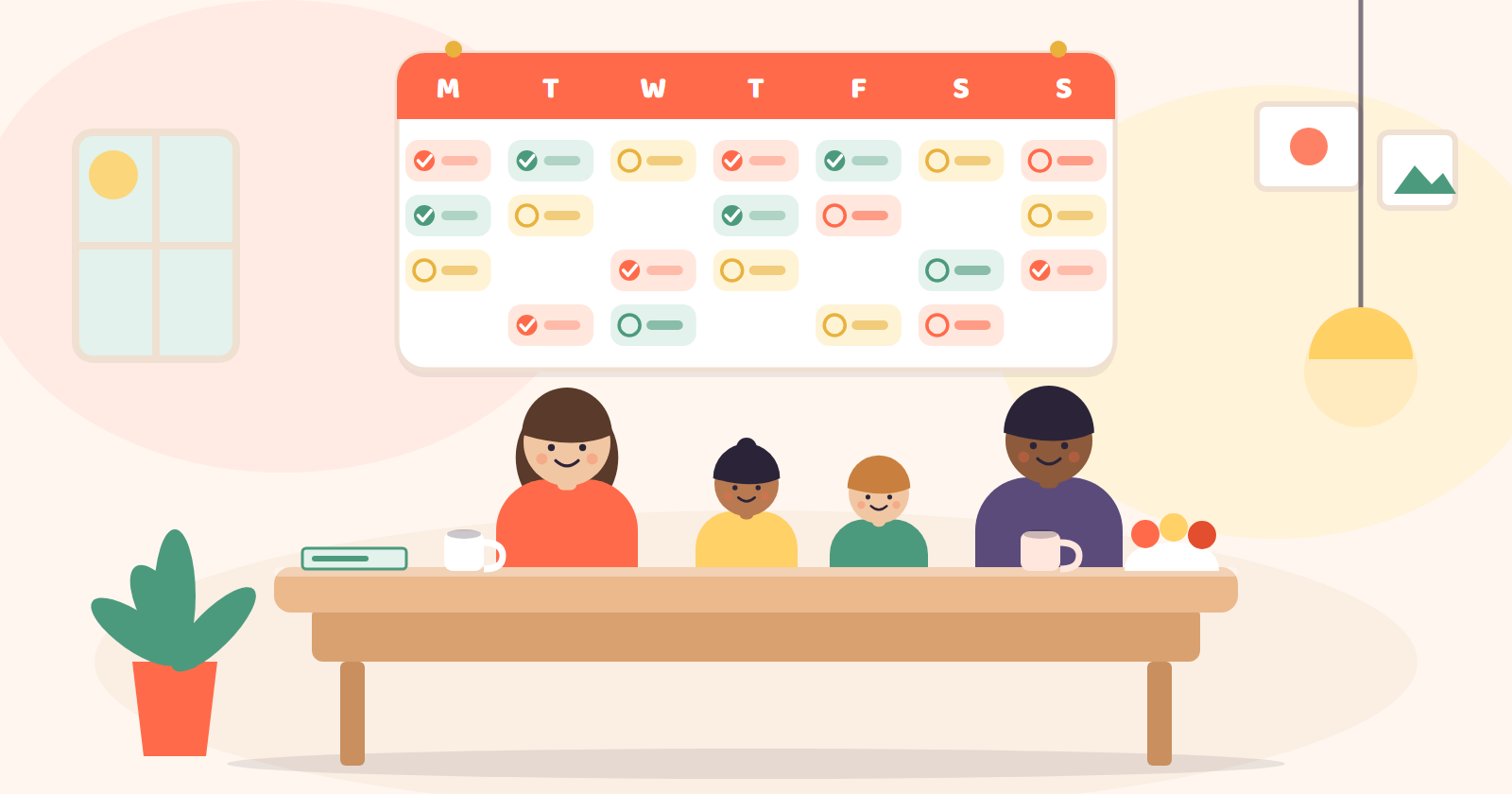
If you have ever stood in the kitchen thinking "I'm the only one who knows we're out of bin bags, the school trip form is due on Friday and Grandad's birthday is next week," you already know what the mental load feels like.
The mental load is the invisible work of running a home: noticing what needs doing, remembering it, planning it and making sure it happens. It is different from the physical jobs themselves. Anyone can put the washing on. The mental load is knowing the washing needs doing, that the football kit has to be clean by Thursday, and that the machine is nearly out of detergent.
It rarely gets shared evenly, and it usually isn't anyone's fault. This guide covers why it builds up in one person's head and five practical steps for spreading it across the whole household.
Why the mental load is so hard to share
There are two reasons it tends to sit with one person.
First, it is invisible. Nobody sees the two minutes spent remembering the dentist appointment or the ten minutes working out what to cook on Wednesday. Because nobody sees the work, nobody thinks to take it on.
Second, the usual way of "helping" keeps the load where it is. If one person is the manager and everyone else asks "what can I do?", the manager still has to think of the job, explain it and check it was done. The thinking never moved.
Real sharing means somebody else takes over the noticing and the planning as well as the doing.
Step 1: Get it all out of one head
You can't share what nobody else can see. Sit down together, or ask the person carrying most of it to do a brain dump, and write down everything that has to happen to keep the household running. Try these headings to jog your memory:
- Meals and food shopping
- School, nursery or childcare
- Appointments (doctor, dentist, vet, MOT)
- Bills, insurance and household admin
- Home maintenance and repairs
- Pets
- Birthdays, presents and social plans
- Holidays and travel
Most families are surprised by how long the list gets. That surprise is useful. It shows everyone how much is going on behind the scenes.
Step 2: Give away whole jobs, not single tasks
"Can you take the bins out?" is a task. "You look after bins and recycling" is a job. The difference is who does the remembering.
When someone owns a whole job, they notice it, plan it and do it from start to finish, and the other person no longer has to think about it at all. Pick a few jobs each and let the owner run them their own way.
It also helps to swap jobs every few months. That keeps things fair and means everyone understands what each job involves.
Step 3: Agree what "done" looks like
A common reason people take a job back is that it wasn't done the way they would have done it. Agree the standard up front: when the shopping needs to be in, how clean is clean enough, which day the bins go out. Then, if the job is done to that standard, leave it alone.
Redoing someone's work, or dropping hints about how you'd have done it, sends the job straight back to you.
Step 4: Put it somewhere everyone can see
A lot of the mental load exists because the plan lives in one person's memory. Move it out of there. A shared calendar, a shared to-do list, a shared shopping list and a place for family admin mean the household remembers things instead of one person.
Any shared system works, from a wall planner to an app, as long as everyone uses it and it is the first place people look. Flupy was built for exactly this: shared to-dos, shopping, a family calendar and meal planning in one space that every family member can see.
Step 5: Hold a short weekly check-in
Fifteen minutes on a Sunday evening is enough. Look at the week ahead together and ask three things:
- What is happening this week (appointments, events, deadlines)?
- Who is doing what?
- Is anything coming up that needs planning or buying now?
Keep it light. The point is to catch problems early, share out anything unexpected, and stop one person having to be the family's memory.
Involving children
Children can take on small jobs of their own from a young age, such as feeding the pet, setting the table or packing their school bag. Let them own the whole job, including remembering it. This teaches useful habits, and it takes a few more items off the grown-ups' lists.
Common pitfalls
- Expecting perfection straight away. It takes a few weeks for new habits to settle. Adjust as you go.
- Keeping a secret list. If the real to-do list only exists in your head, nothing has been shared.
- Only talking about it when someone is worn out. A regular check-in is easier than a difficult conversation after a bad week.
- Treating it as a scorecard. The goal is a home that runs smoothly for everyone, not a tally of who did most.
Where to start
You don't need to fix everything at once. This week, do the brain dump, choose two or three whole jobs to hand over, and put the household plan somewhere everyone can see.
If you'd like a shared space for your household's tasks, lists and calendar, you can try Flupy free for 30 days. No card is needed to start. You can also see the pricing at any time.